What I have been working on this week (Sep 1 - Sep 5)
Last week’s post covered the big compatibility and audio work. This week went in a different direction: most of it was spent on how Serento reads your library, and on the things you see every day. Several of these came straight from feedback from the MinimServer forum.
Artist names
This is the one I am happiest to have closed. Some albums were showing up under artists that do not exist. “Derek and the Dominos” was being split into two artists, and a band like “De Dijk” could come apart into pieces of its own name. The rule Serento uses now is simple: when a credit could be one artist or several, the music catalogue decides, not a guess about punctuation. If the catalogue knows the whole credit as a real artist, it stays whole. If it does not, the parts become separate artists, each with their own albums.
Two smaller things came with it. If your server sends several values for the same tag, all of them are read now instead of only the first, so a track credited to two people shows both. And a credit written as “Dir. Gregorio Paniagua” or “Conductor: Frederick Fennell” no longer creates an artist whose name starts with their job title.
Genres
Serento now reports exactly the genres your server reports. If your server says you have 88 genres, you get 88 genres, with the names it uses. Before this, a genre tagged as “Electronic, Ambient” was being taken apart into pieces, which both invented genres your server does not have and lost the ones it does. Album counts behind the genre tiles were inflated for the same reason and are now correct.
Filters
If you opened a filter and ticked every option in a section, you could end up with zero albums. Ticking every sample rate, for example, asked for albums that were 44.1 kHz and DSD at the same time, which nothing can be. Selecting everything in a section now means exactly what it looks like: you get everything. This applies to every list that has filters, including tracks and the classical section. Selecting nothing still means no filtering, and excluding something still excludes it.
Booklets
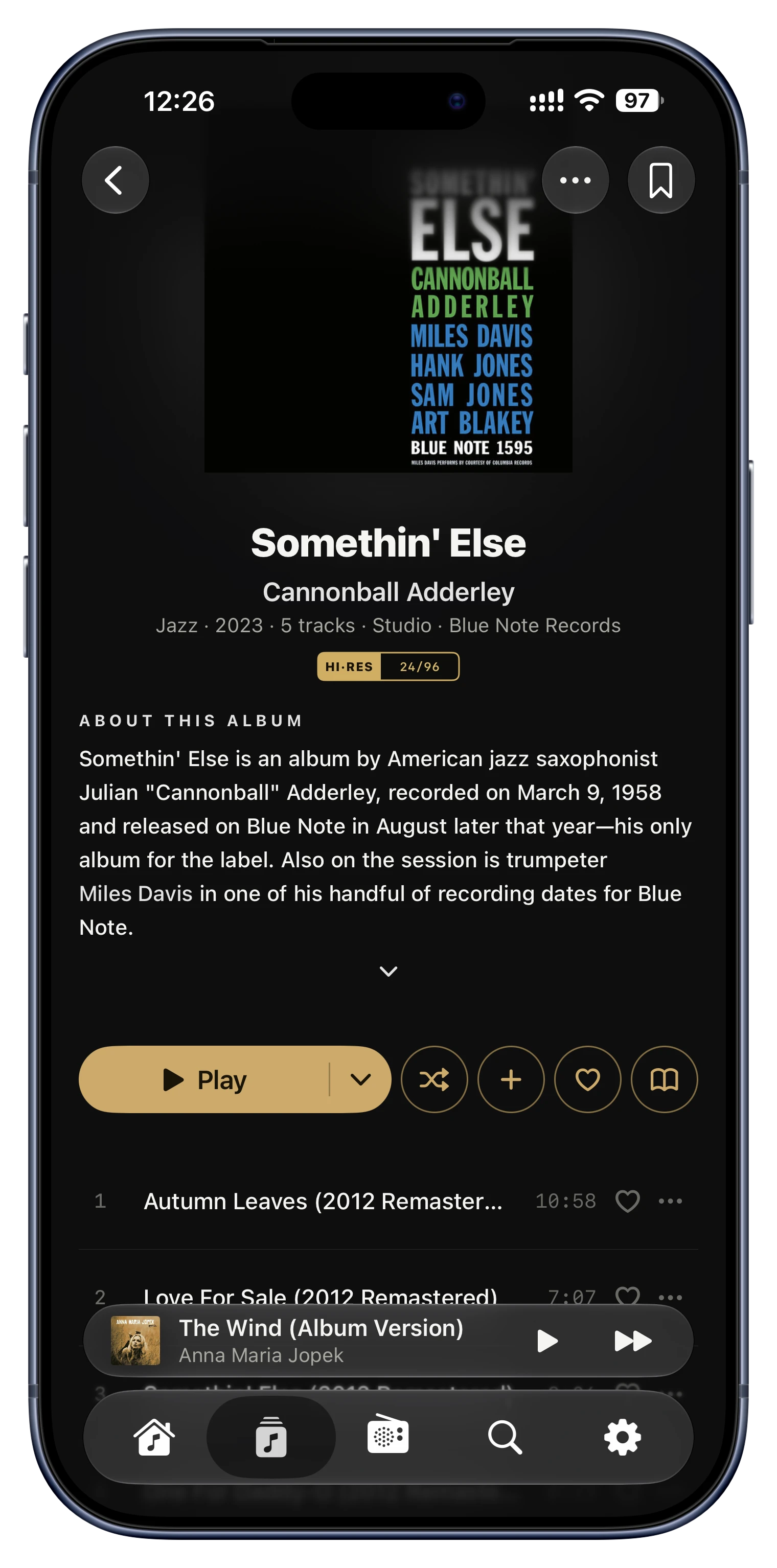
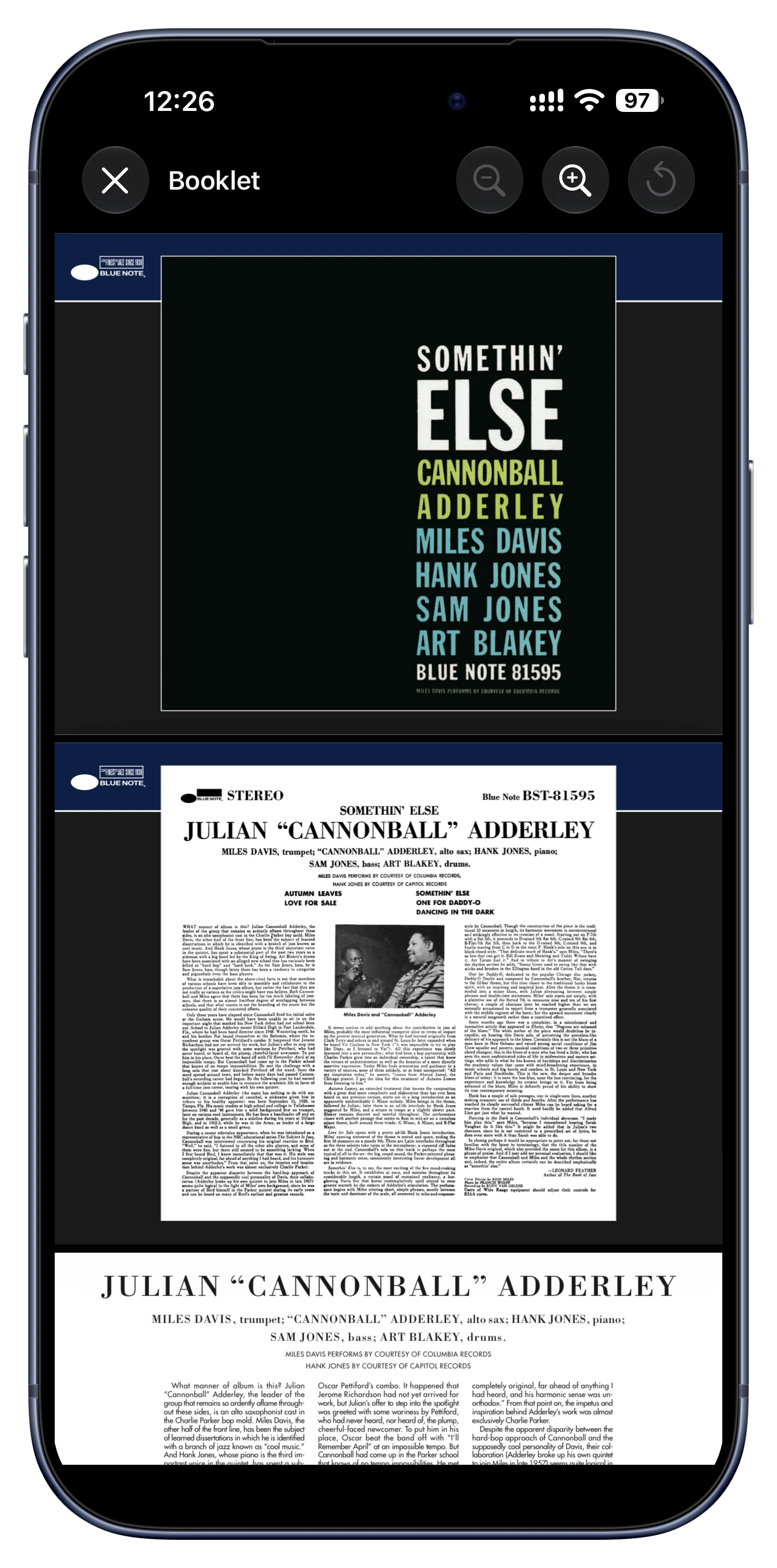
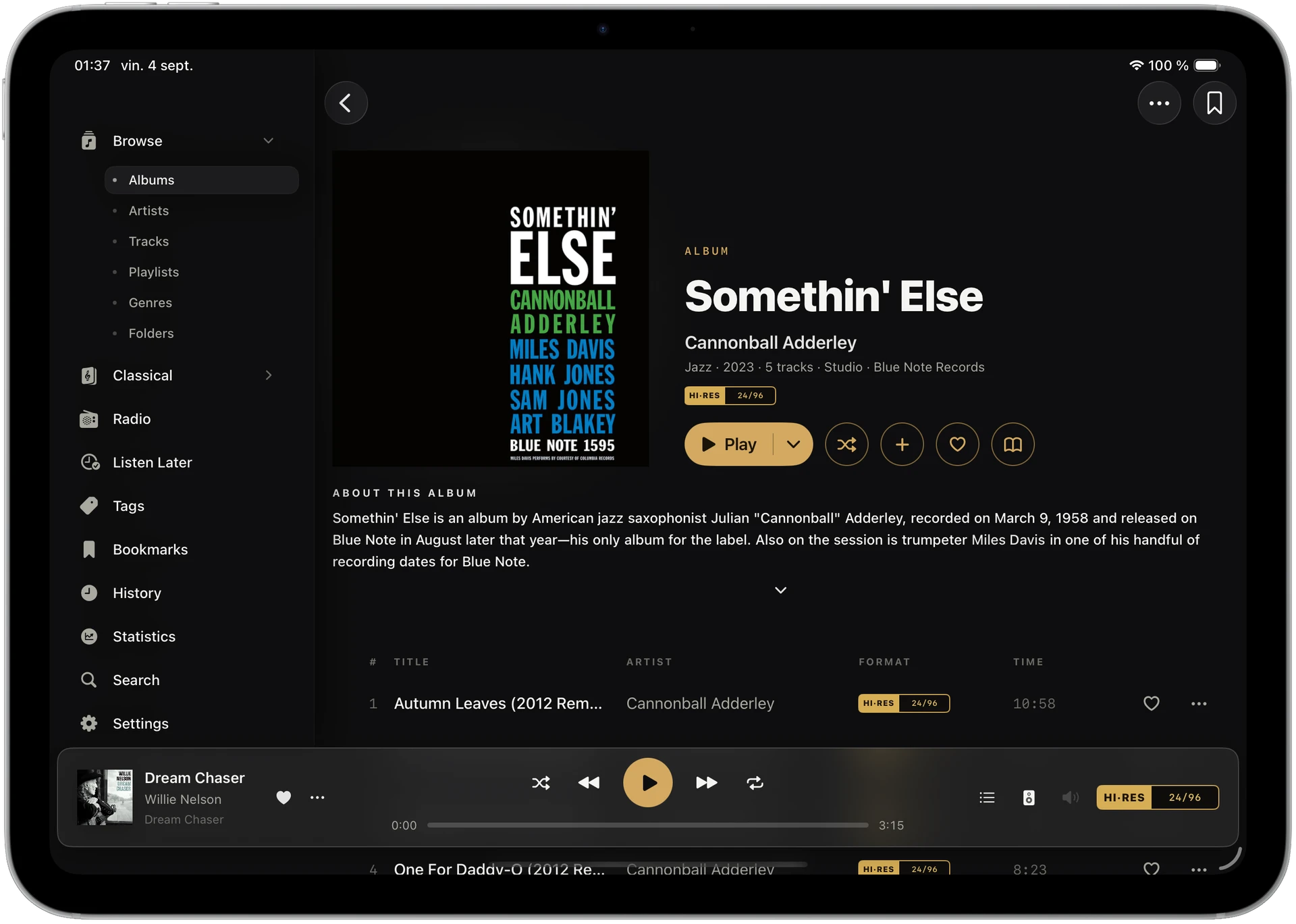
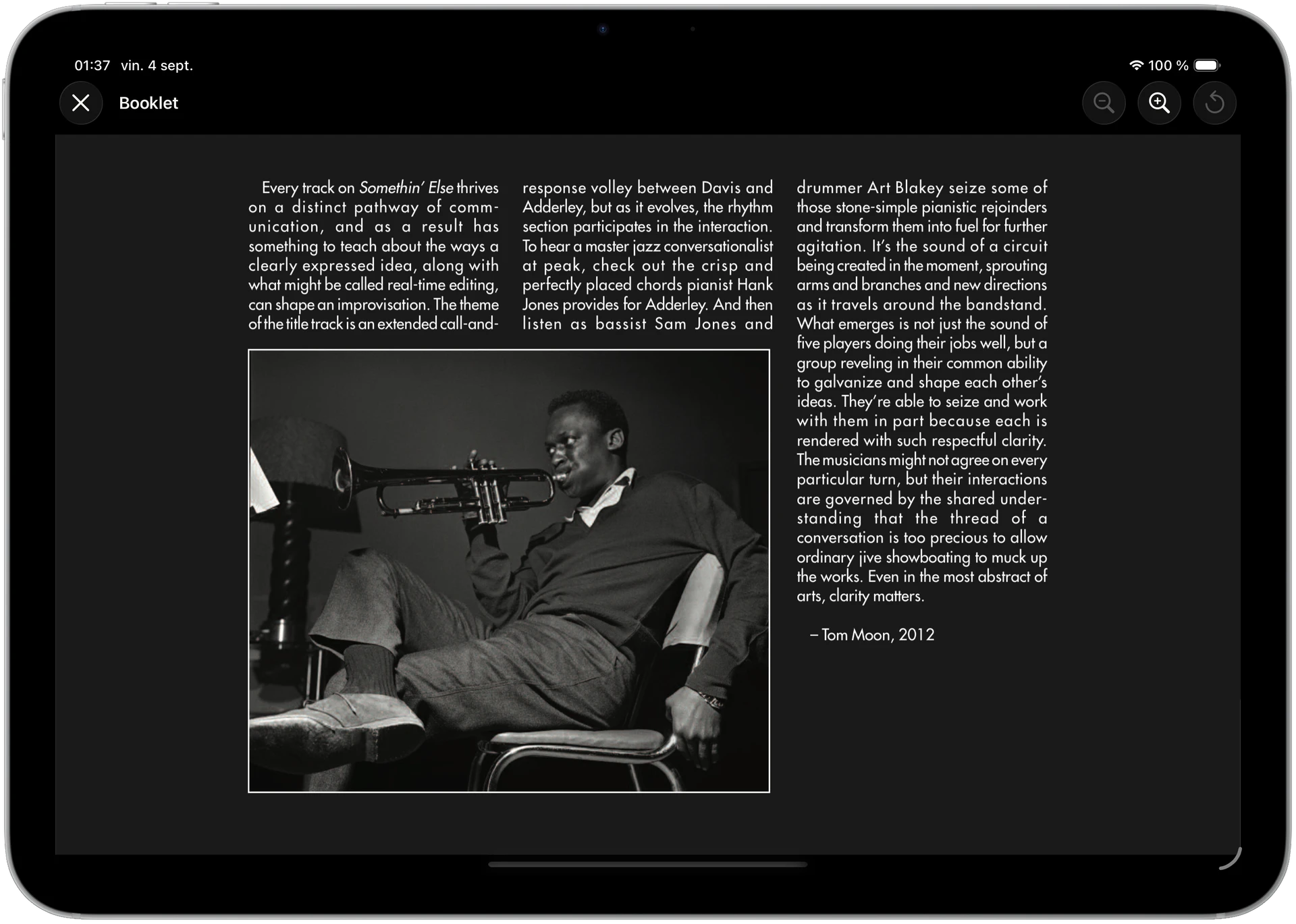
Serento now finds the PDF booklet that sits beside your music files and shows it in the app, with its own reader. The search happens during the sync, with its own step on the sync screen, so opening an album is instant rather than waiting on the server. Albums that have one show it; albums that do not are unaffected.
Artwork
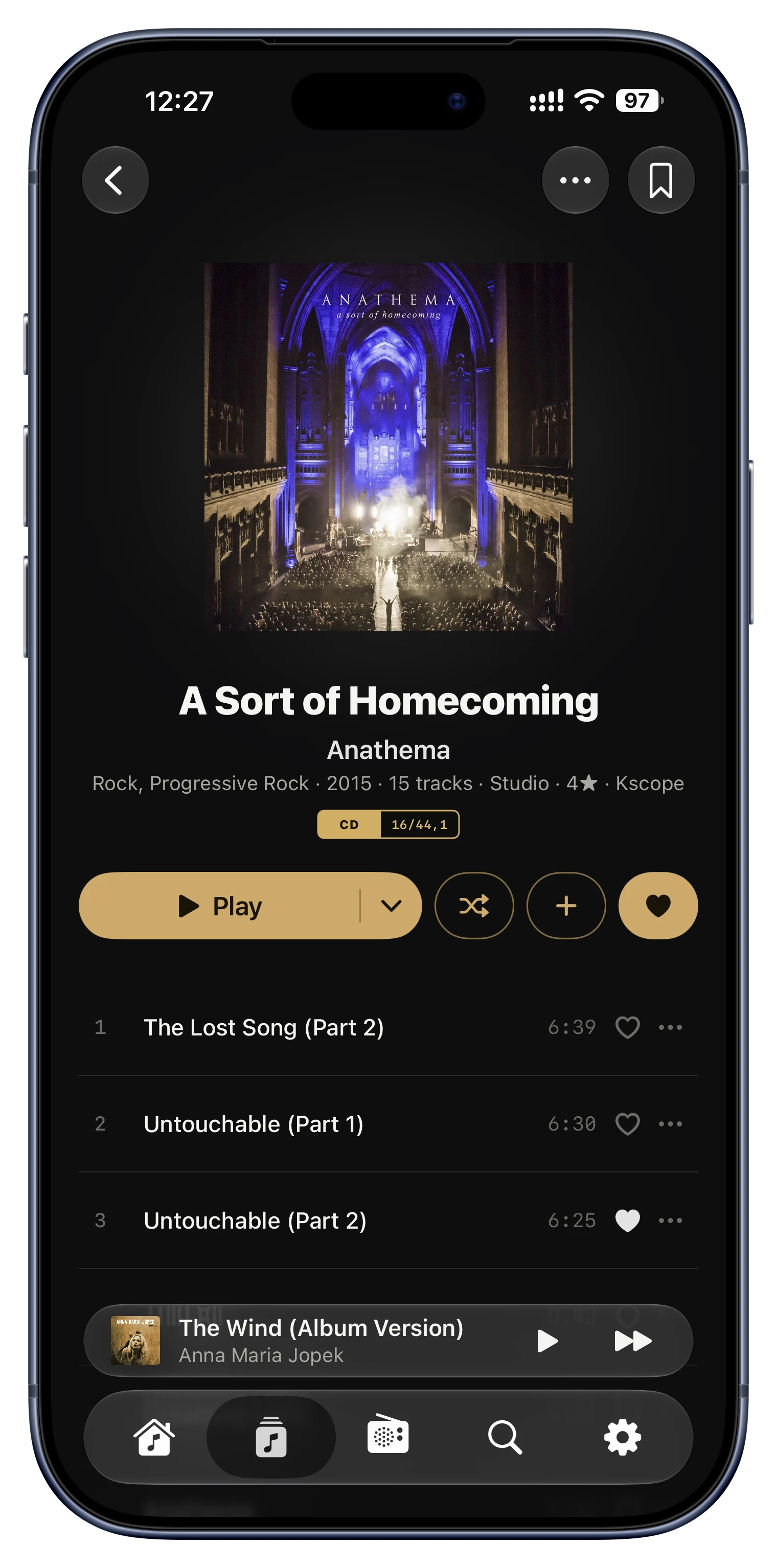
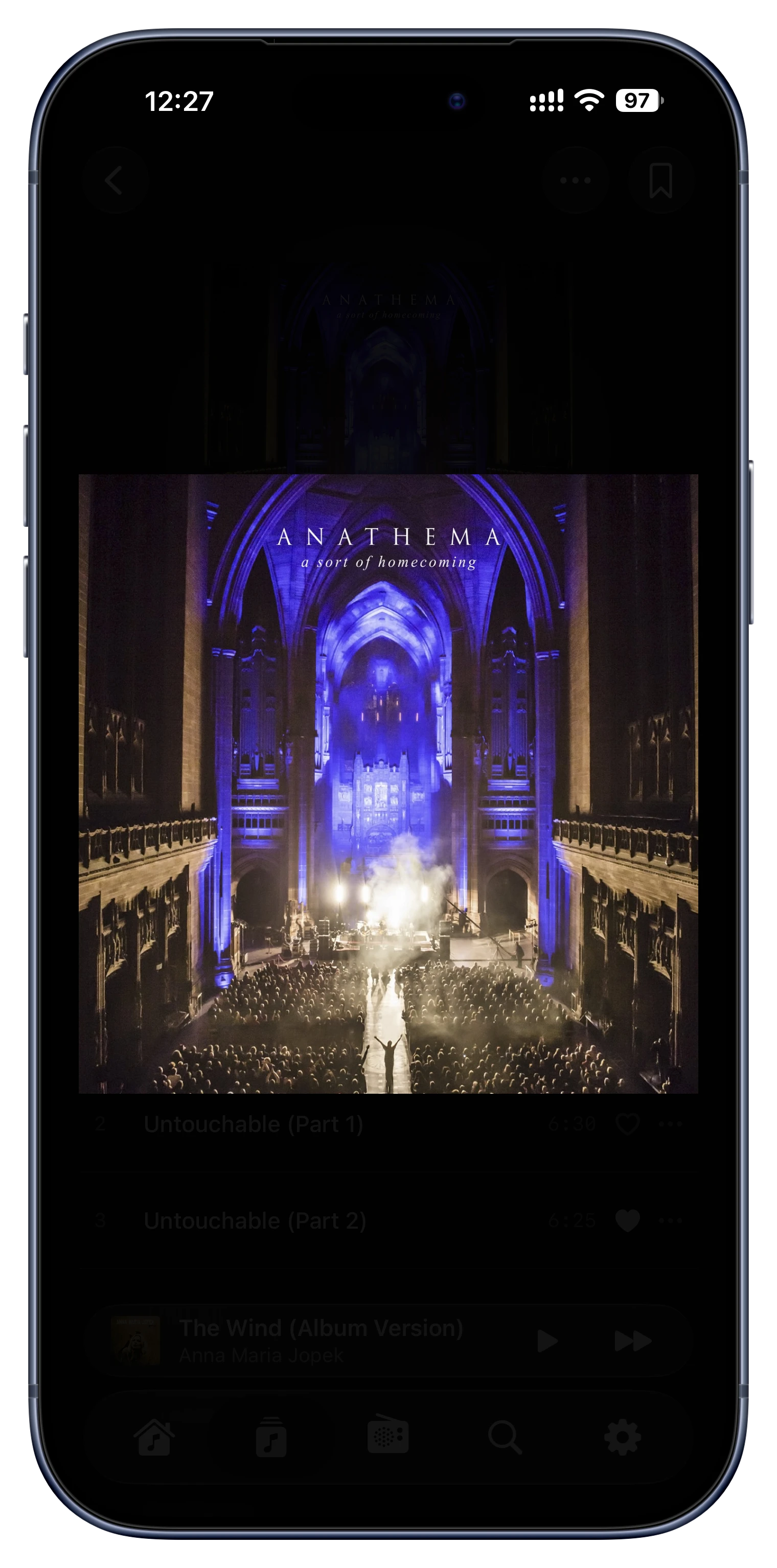
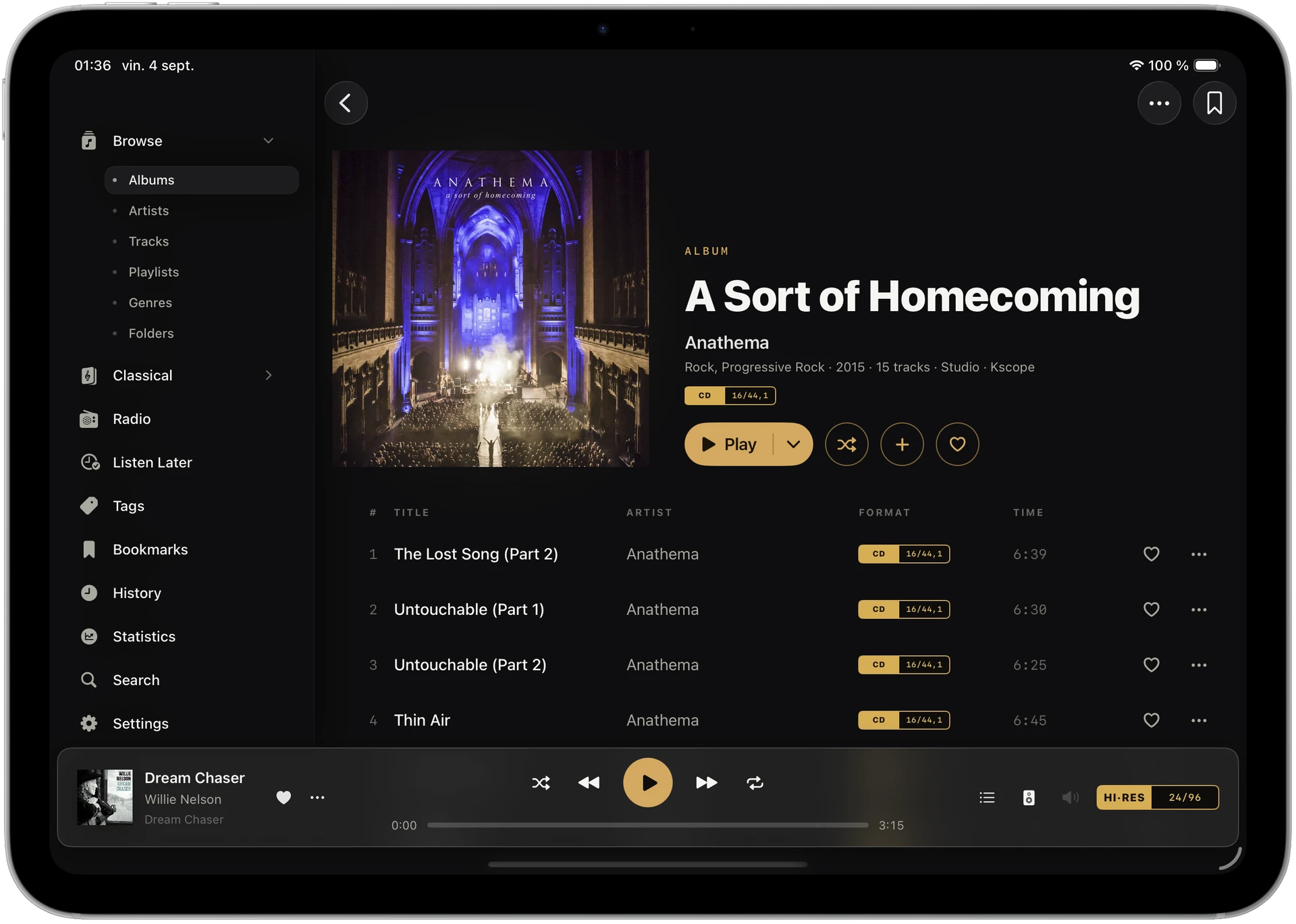
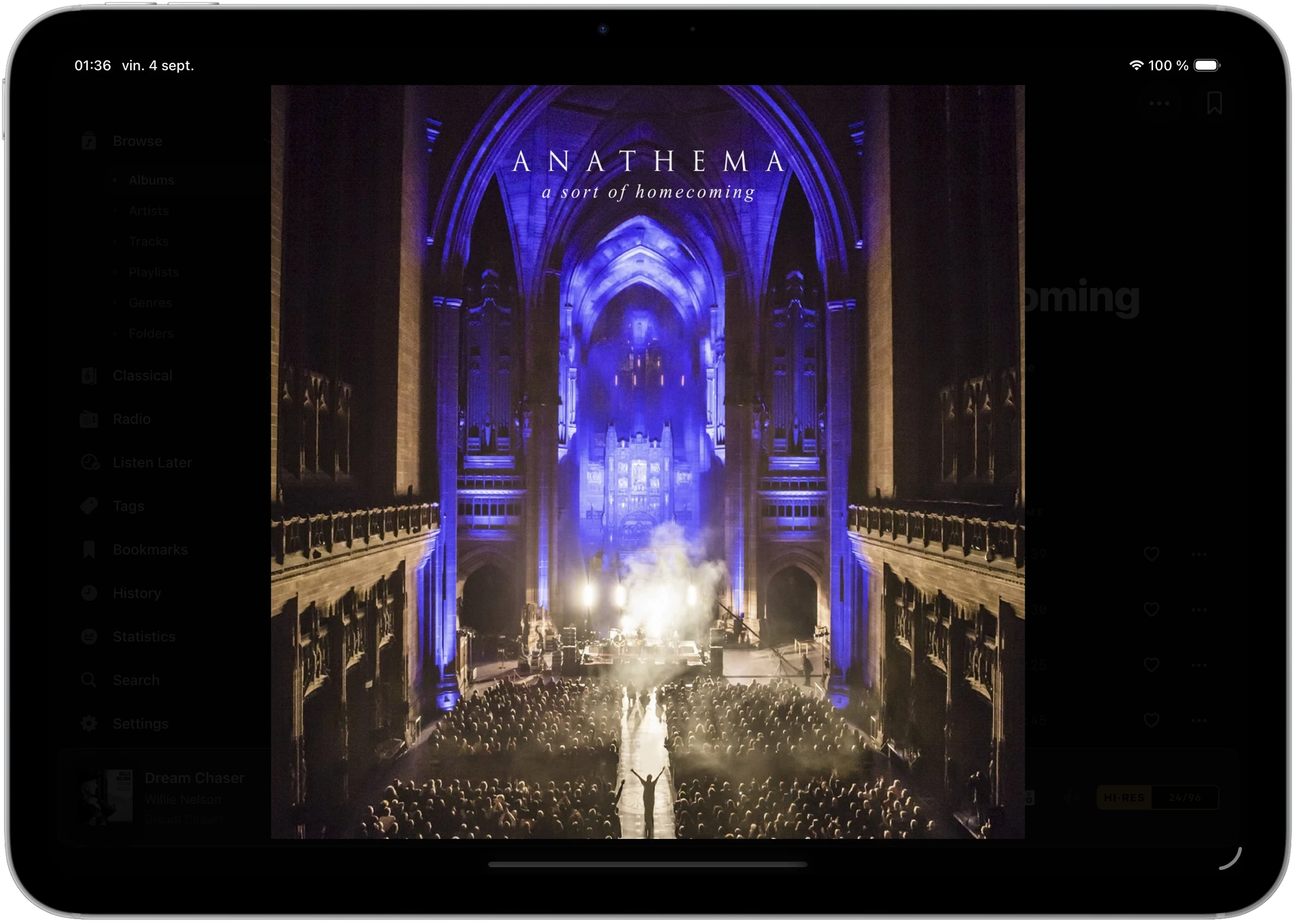
Tapping the cover on an album or artist page now opens it full size on a dark layer, so you can actually look at the art you paid for.
Small screens and the radio panel
On the smallest iPhones, and on any device with larger text sizes, the Now Playing screen was cut off at the edges. That is fixed. The radio panel now adapts how much it shows to the height it actually has, instead of overflowing.
Downloaded music playback
If you take your music with you as downloaded albums or playlists you probably noticed that Serento fails to resume the music if it gets interrupted by another application’s audio or by a phone call. This has been fixed and when you go back to Serento after an interruption the music resumes instantly.
Under the hood
A good part of the week went into checking Serento against the UPnP specification and the MinimServer documentation, line by line, rather than against my own assumptions. Two things came out of it. Album detection was measured against a real 17,000 track library and matches what the server itself reports, album for album.
If something looks wrong in your library, telling me what you see is genuinely the fastest way to get it fixed, and Settings, then Enable Logs, then Send Logs gives me the rest.